
HOUSING SOCIALE / VIA CENNI
Project Statement
Una Comunità per Crescere responds to two global challenges that are central to Tim Power Architects’ practice: environmental fragilty and social vulnerability. Informed by adaptive systems thinking, the project approaches the design of social housing by first considering broader contexts—beginning with the landscape, extending through shared services and public spaces, and situating architecture within planetary ecological systems.
Social Concerns within an Ecological Scale
The project is grounded in a nested ecological framework, where individual, communal and environmental needs function as interconnected systems across different scales. Family dwellings operate as microsystems, embedded within mesosystems such as shared spaces and playgrounds, exosystems including urban agriculture and commercial programs, and macrosystems shaped by Milan’s climatic and metropolitan conditions. These layers interact, informing each-other, over long temporal cycles.
Within this framework, social housing and communal services are understood not as isolated programs, but as mutually reinforcing components of a broader social-ecological structure. Social agency is therefore linked directly to planetary ecological processes.
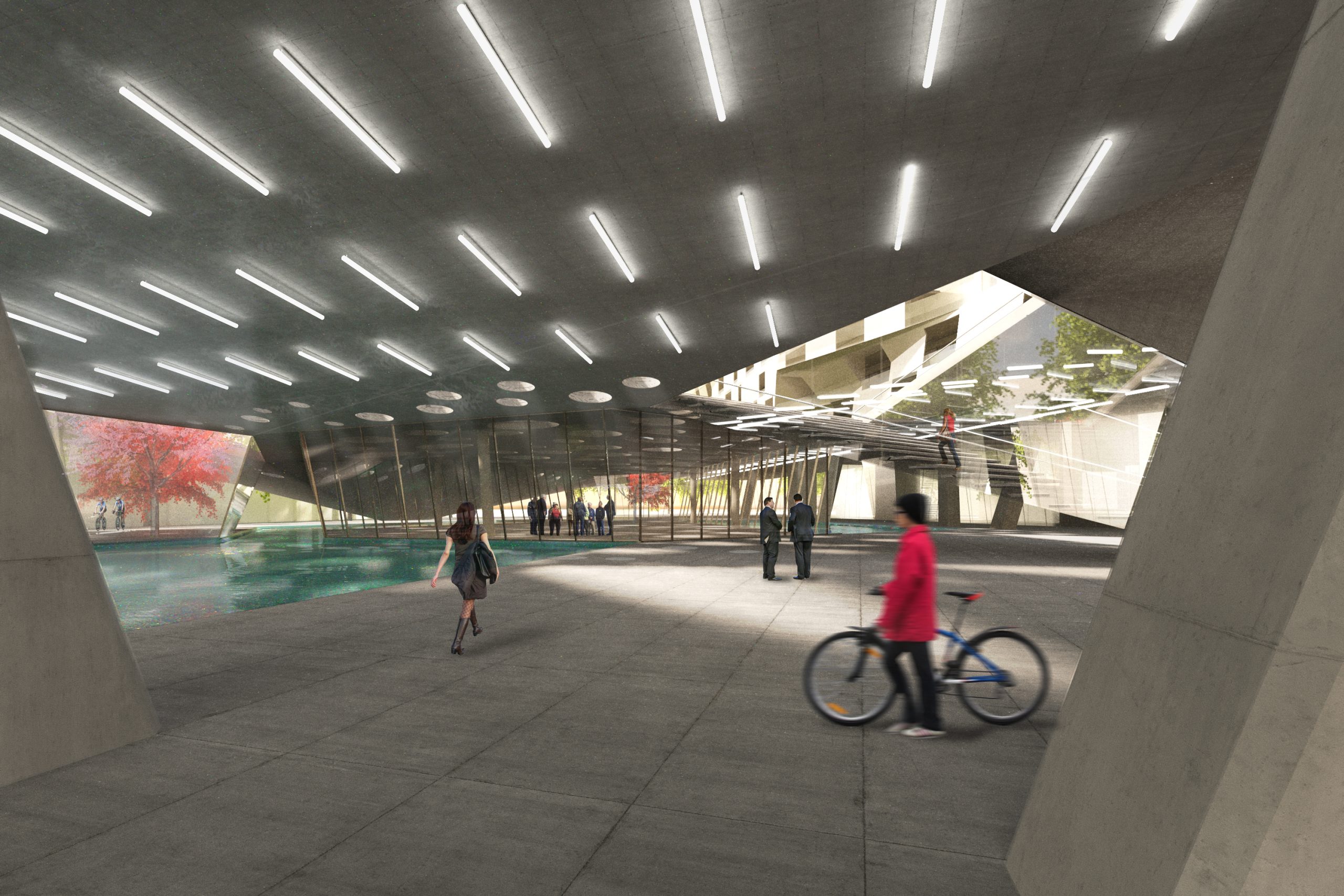
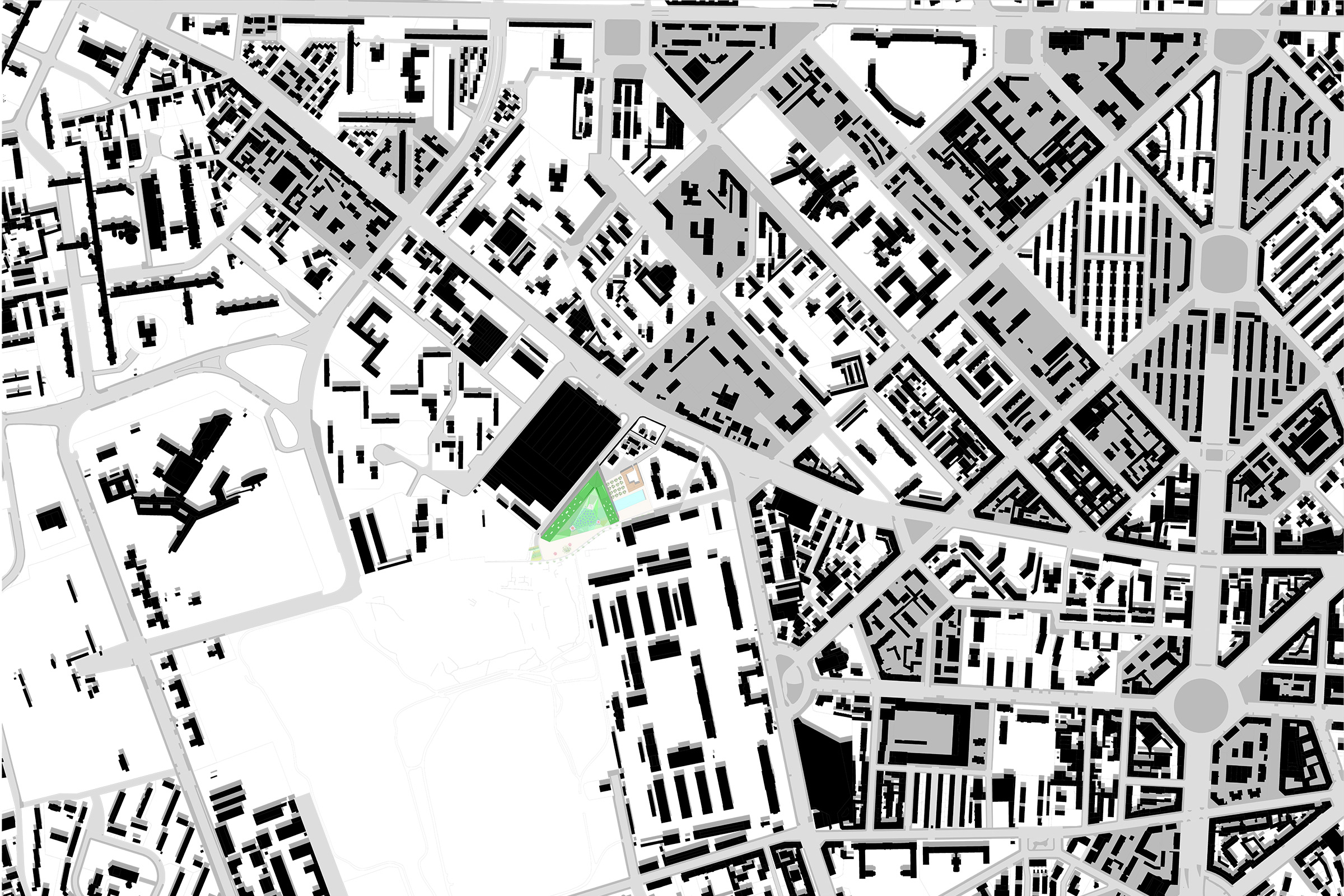
The 9,000-square-meter intervention at Via Cenni in Milan includes 110 family apartments integrated with social infrastructure, commercial spaces, playgrounds, and urban farms. Domestic life is positioned within a wider ecological field rather than separated from it.
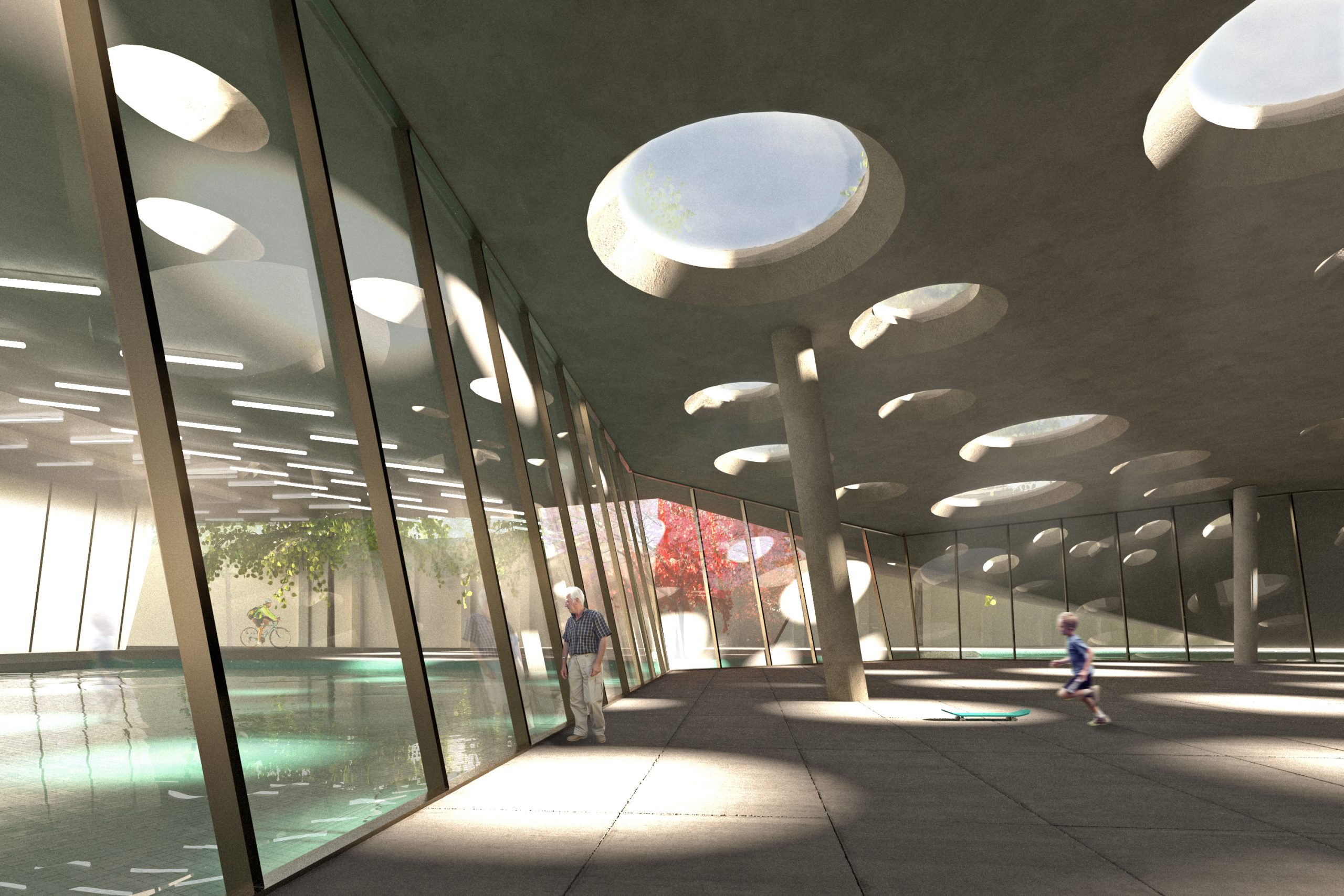
We propose that in order to provide stewardship of natural systems within design practices, Architecture must extend beyond conventional technical or economic considerations. Care in building emerges through what we describe as a nested ecological responsibility—an approach that aligns site-specific topographies and typologies, non-extractive practices, and material choices with natural time cycles. Weather patterns, planting and vegetative processes, and water systems are treated as active design forces, contributing to long-term regeneration across scales.
Architecture as Landscape
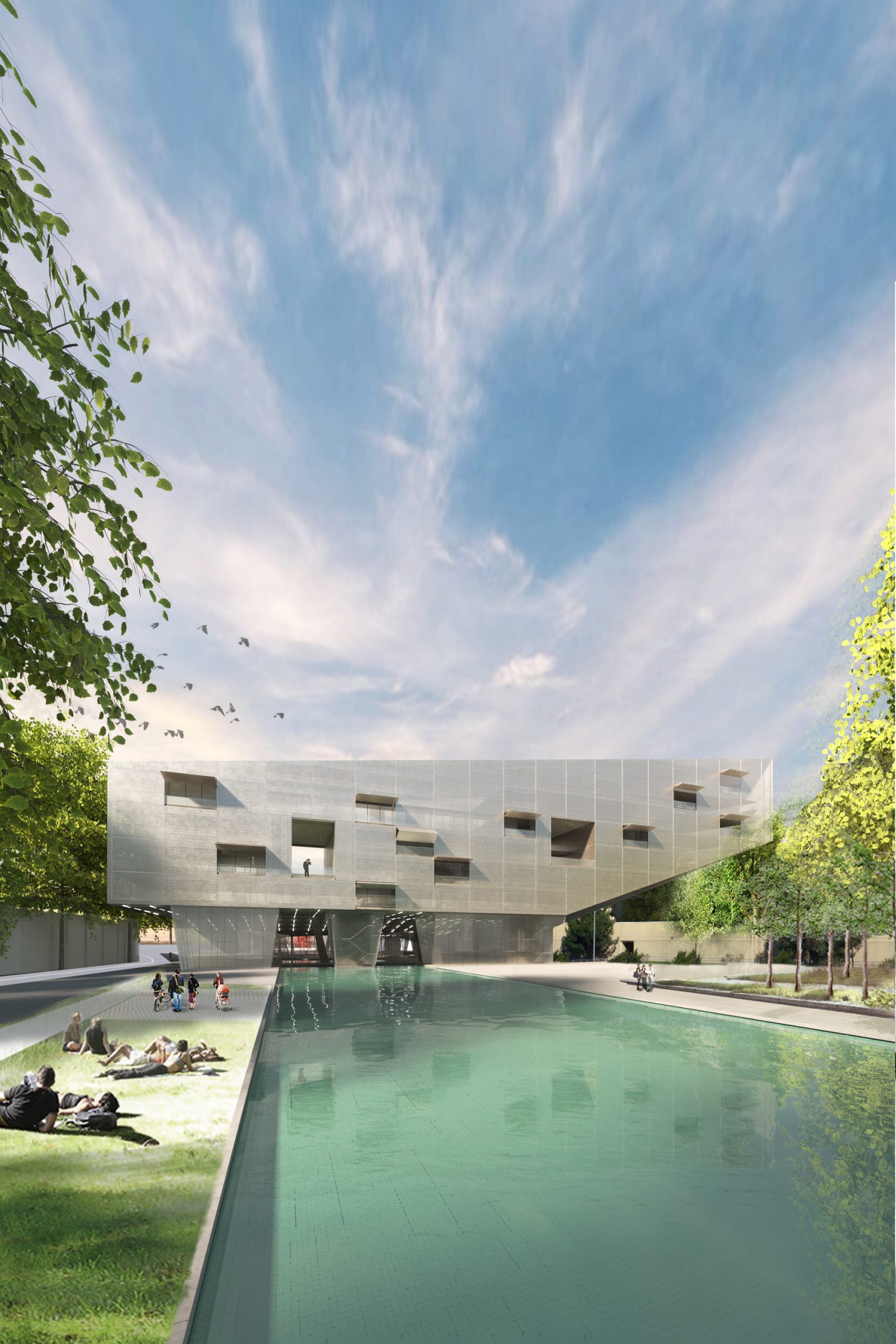
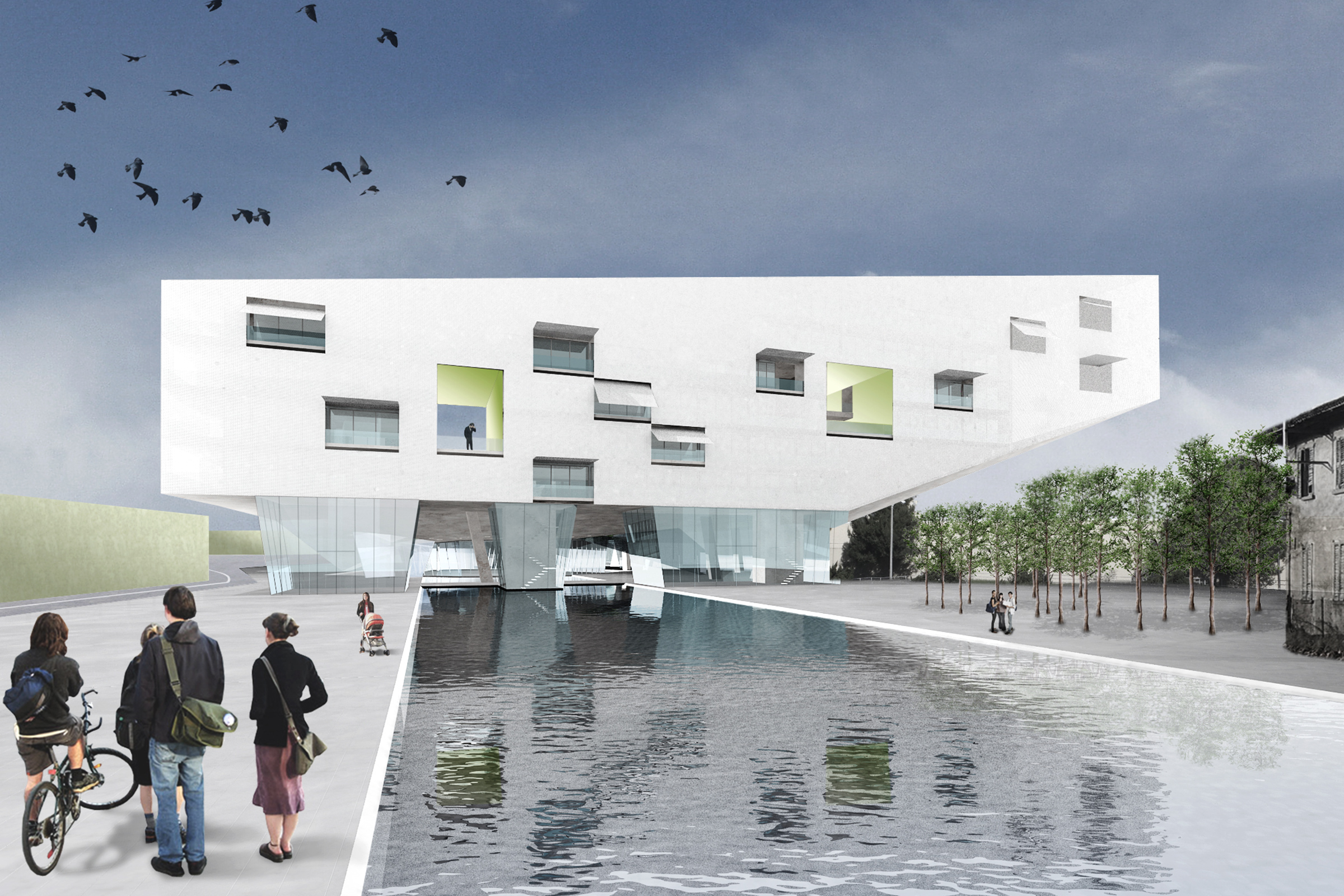
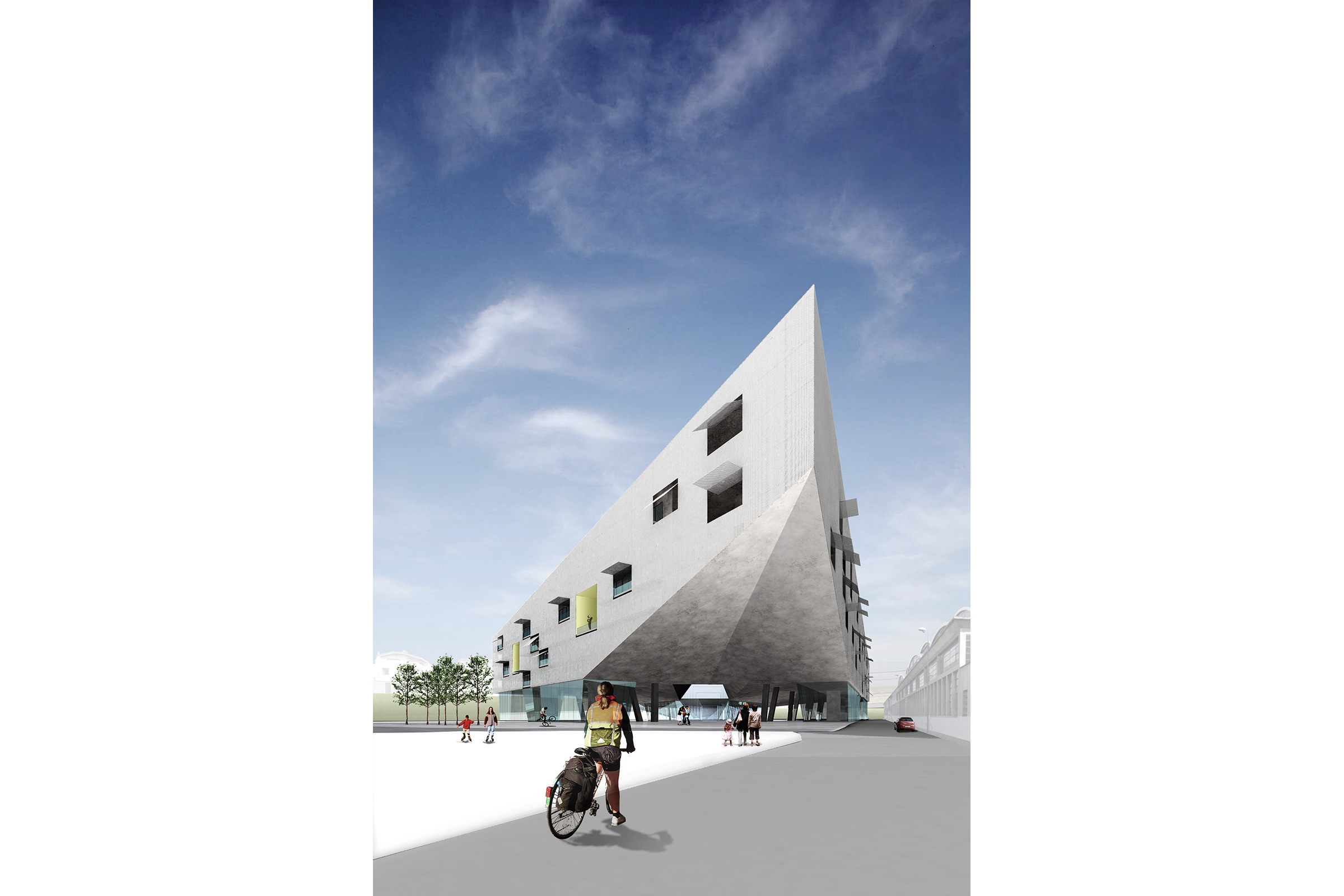
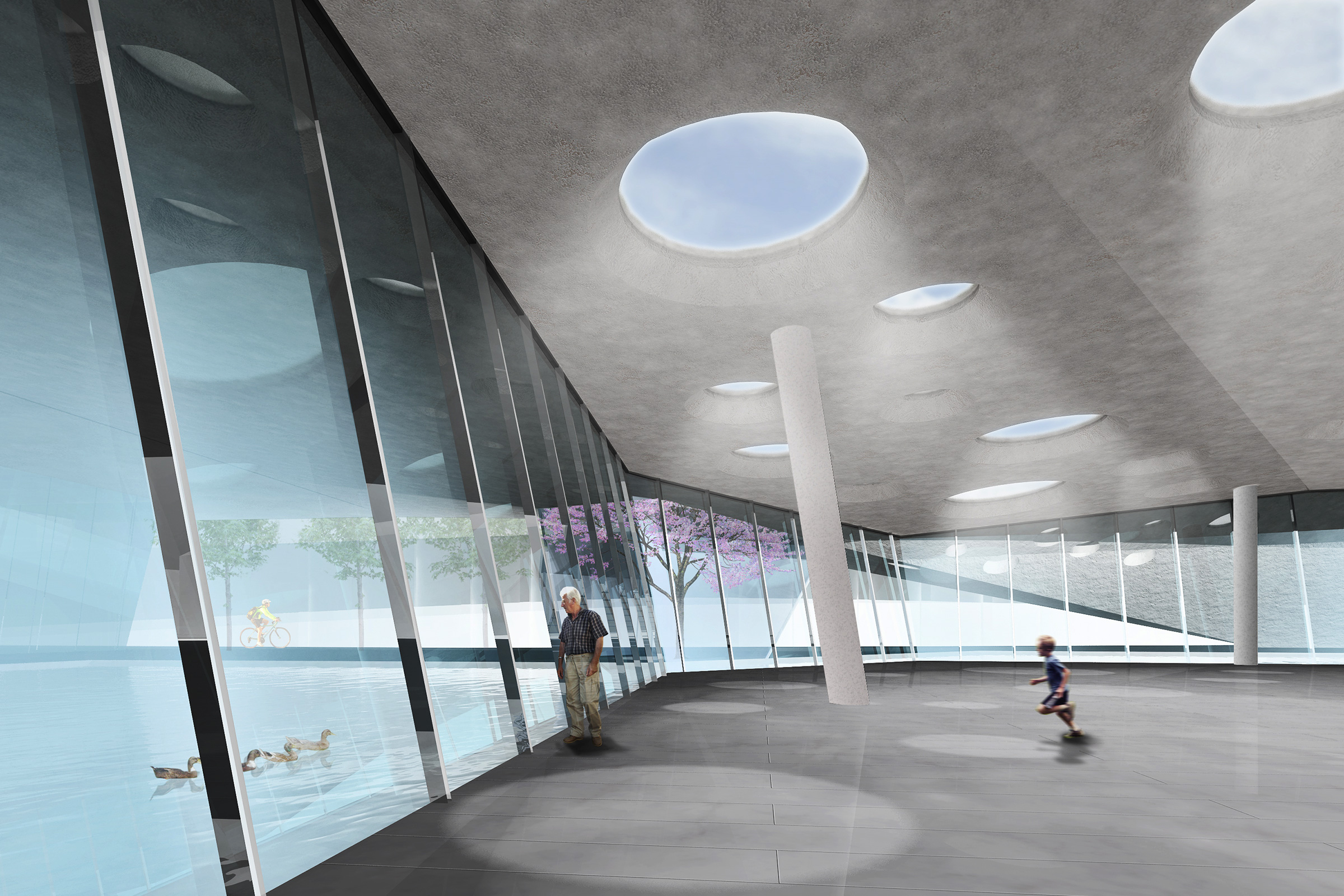
The building is conceived as a grounded, tectonic presence—substantial and enduring—functioning as a micro-ecosystem in which natural processes shape architectural form. Integrated into Milan’s urban fabric, the project draws from the geological logic of the Alpine landscape beyond the city.
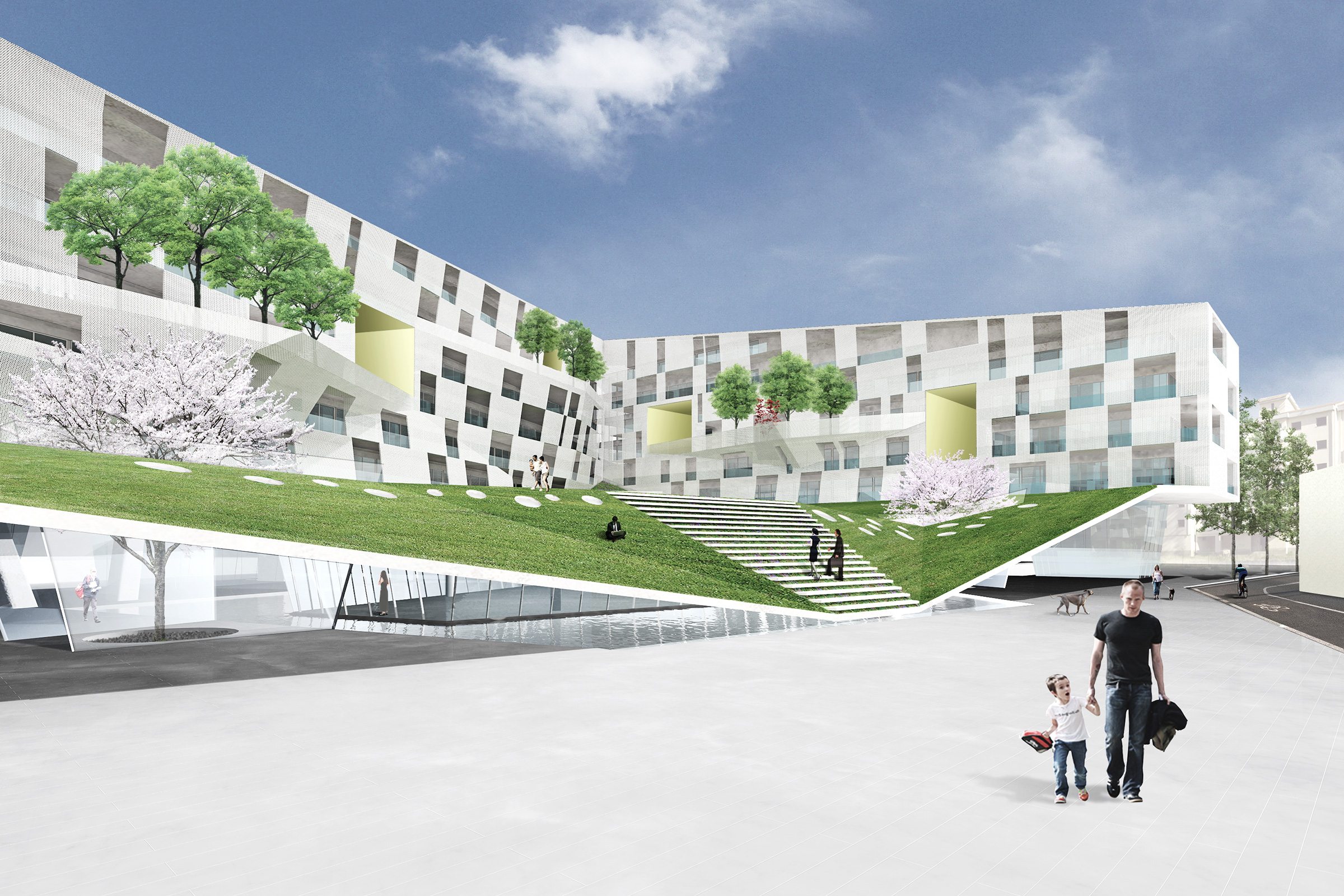
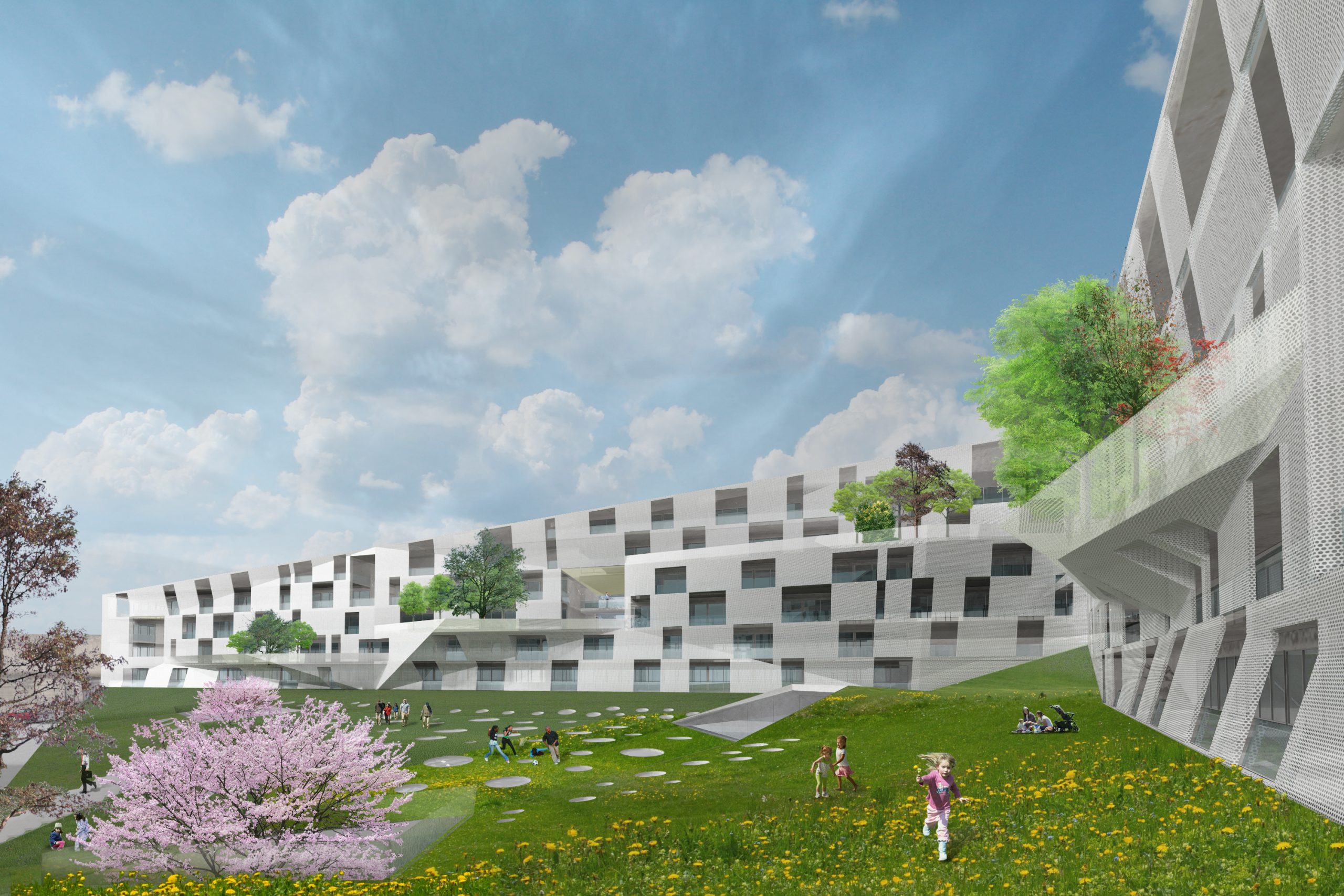
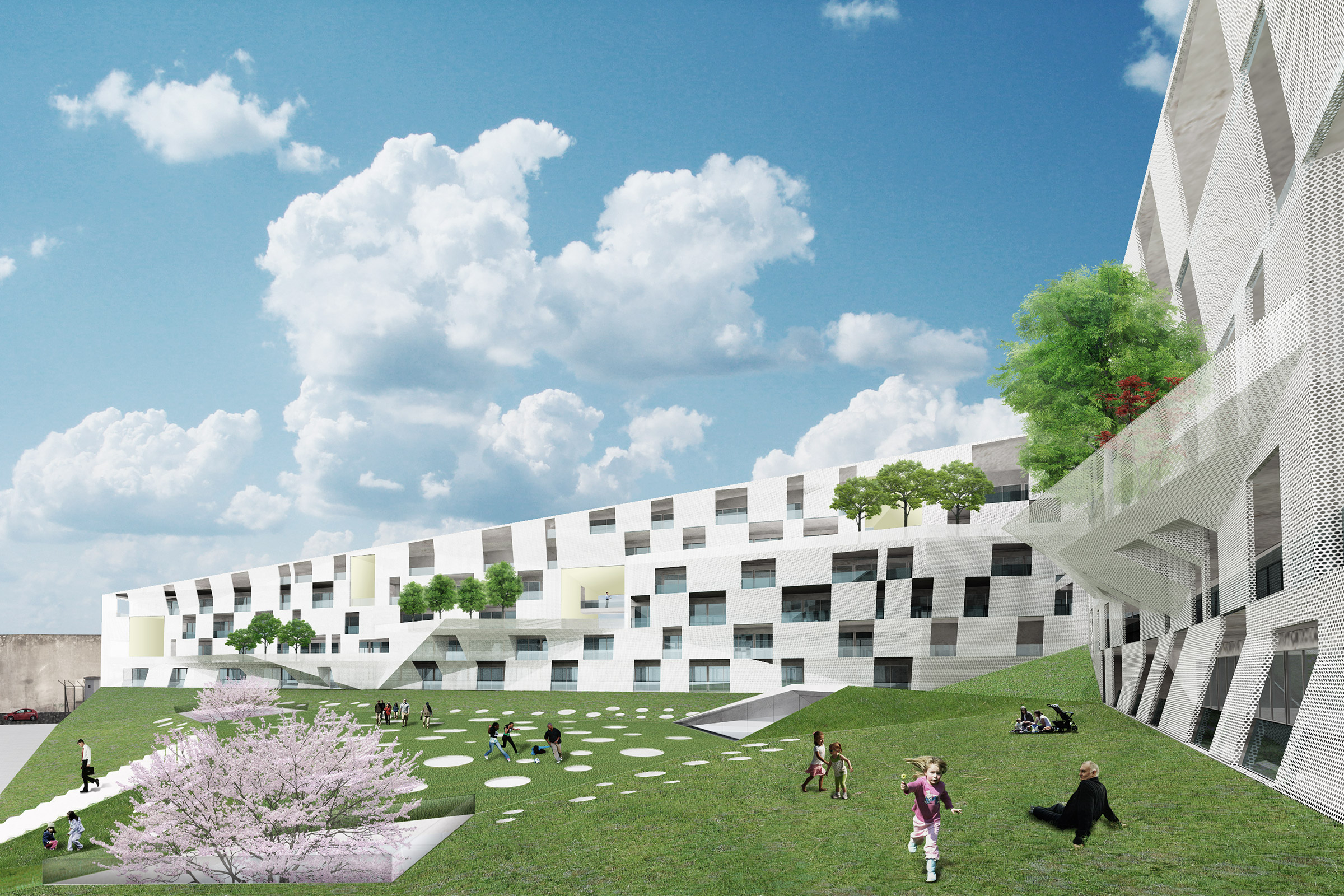
Steep, south-facing residential units step upward, planted with low vegetation, grasses, and regenerative woodland, folding into the terrain through a reversal of landscape and building. These elevated forms meet gentler, pastoral conditions at ground level. Each unit opens onto a generous semi-collective terrace that brings daylight, views, and shared outdoor space into daily life. Tree-lined paths rise through sloped grasslands to the green roof above, extending the landscape vertically.
Along the north-facing façade, operable shading devices moderate early morning and late afternoon light. All apartments are designed for cross-ventilation and receive natural light from both orientations.
Through this layered and interconnected organization—linking private interiors with shared territories and broader landscapes—the project achieves a form of passive sustainability that is resilient, inclusive, and rooted in ecological realities.
Competition Recognition
For their proposal for Una Comunità per Crescere, Tim Power Architects secured Third Prize in the international Housing Sociale competition, selected by an eleven-member jury of social housing experts from five European countries. The competition drew over 1,100 architectural studios with more than 250 proposals.
Result:
Location:
Year:
Size:
Budget:
Client:
.
.
Promotor:
Team:
Program:
.
3rd Place
Via Cenni, Milano, Italy
Competition Launched 2009
Approx. 9,000 m²
Not Publicly Disclosed
Polaris Investment Italia SGR,
(Fondo Etico “Abitare Sociale 1”),
Fondazione Housing Sociale,
Comune di Milano
Timothy Power, Carlo Convertini
Social Housing, Assisted Living, Communal Spaces, Urban Farms, Playgrounds, Commerce
HOUSING SOCIALE / VIA CENNI

Project Statement
Una Comunità per Crescere responds to two global challenges that are central to Tim Power Architects’ practice: environmental fragilty and social vulnerability. Informed by adaptive systems thinking, the project approaches the design of social housing by first considering broader contexts—beginning with the landscape, extending through shared services and public spaces, and situating architecture within planetary ecological systems.
Social Concerns within an Ecological Scale
The project is grounded in a nested ecological framework, where individual, communal and environmental needs function as interconnected systems across different scales. Family dwellings operate as microsystems, embedded within mesosystems such as shared spaces and playgrounds, exosystems including urban agriculture and commercial programs, and macrosystems shaped by Milan’s climatic and metropolitan conditions. These layers interact, informing each-other, over long temporal cycles.
Within this framework, social housing and communal services are understood not as isolated programs, but as mutually reinforcing components of a broader social-ecological structure. Social agency is therefore linked directly to planetary ecological processes.
The 9,000-square-meter intervention at Via Cenni in Milan includes 110 family apartments integrated with social infrastructure, commercial spaces, playgrounds, and urban farms. Domestic life is positioned within a wider ecological field rather than separated from it.
We propose that in order to provide stewardship of natural systems within design practices, Architecture must extend beyond conventional technical or economic considerations. Care in building emerges through what we describe as a nested ecological responsibility—an approach that aligns site-specific topographies and typologies, non-extractive practices, and material choices with natural time cycles. Weather patterns, planting and vegetative processes, and water systems are treated as active design forces, contributing to long-term regeneration across scales.
Architecture as Landscape
The building is conceived as a grounded, tectonic presence—substantial and enduring—functioning as a micro-ecosystem in which natural processes shape architectural form. Integrated into Milan’s urban fabric, the project draws from the geological logic of the Alpine landscape beyond the city.
Steep, south-facing residential units step upward, planted with low vegetation, grasses, and regenerative woodland, folding into the terrain through a reversal of landscape and building. These elevated forms meet gentler, pastoral conditions at ground level. Each unit opens onto a generous semi-collective terrace that brings daylight, views, and shared outdoor space into daily life. Tree-lined paths rise through sloped grasslands to the green roof above, extending the landscape vertically.
Along the north-facing façade, operable shading devices moderate early morning and late afternoon light. All apartments are designed for cross-ventilation and receive natural light from both orientations.
Through this layered and interconnected organization—linking private interiors with shared territories and broader landscapes—the project achieves a form of passive sustainability that is resilient, inclusive, and rooted in ecological realities.
Competition Recognition
For their proposal for Una Comunità per Crescere, Tim Power Architects secured Third Prize in the international Housing Sociale competition, selected by an eleven-member jury of social housing experts from five European countries. The competition drew over 1,100 architectural studios with more than 250 proposals.
Result:
Location:
Year:
Size:
Budget:
Client:
.
.
Promotor:
Team:
Program:
.
3rd Place
Via Cenni, Milano, Italy
Competition Launched 2009
Approx. 9,000 m²
Not Publicly Disclosed
Polaris Investment Italia SGR,
(Fondo Etico “Abitare Sociale 1”),
Fondazione Housing Sociale,
Comune di Milano
Timothy Power, Carlo Convertini
Social Housing, Family Apartments, Communal Spaces, Urban Farms, Playgrounds, Commerce